Twelve boards, routed.
Guitar pedals, a headphone amplifier, a Bluetooth control board, a cable tester, an assistive switch interface. Generated from code, placed by annealing, routed, rule-checked and rendered from the real geometry.

I do not draw schematics by hand any more. The netlist comes out of a Python generator, the parts get placed by simulated annealing, the router runs, the design-rule check runs, and the fabrication package falls out the end — one command, every time. It sounds like over-engineering for a stompbox until the third time somebody changes a component value and you regenerate the whole board in a minute instead of a weekend.
Twelve of them are routed and clean. Each is photographed the same way: five ray-traced views at 2048 × 1536, straight out of the CAD, with the real copper, the real soldermask and the real silkscreen. Sixty renders altogether. Nothing on this page is a mock-up of a board that does not exist.
- 12 boards routed, 0 unconnected nets at design-rule check
- 60 renders ray-traced, 5 views per board at 2048 × 1536
- 20 units of MVP-1 Rev B at the fab
- KiCad 10
- Generated netlists
- Annealed placement
- Autorouting & DRC gates
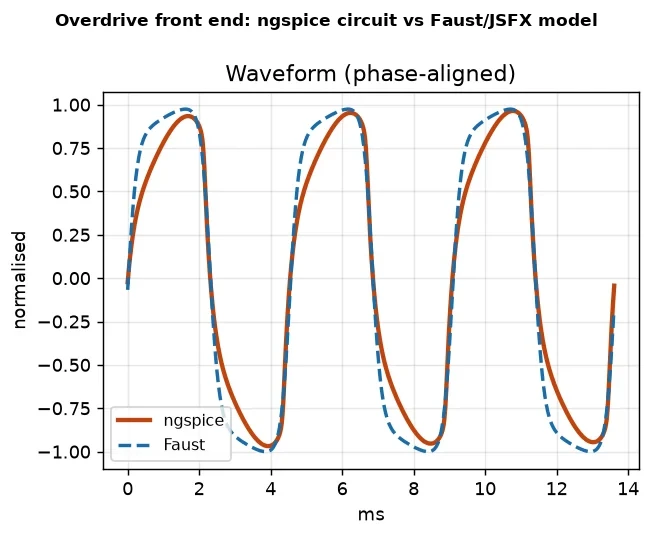
- ngspice / Xyce verification
- Panelisation
- Turnkey assembly sourcing
The kit boards.
Three pedals meant to be built by hand by somebody who has never populated a board before — through-hole where it helps, a silkscreen that tells you what goes where, and a bill of materials one distributor can fill.
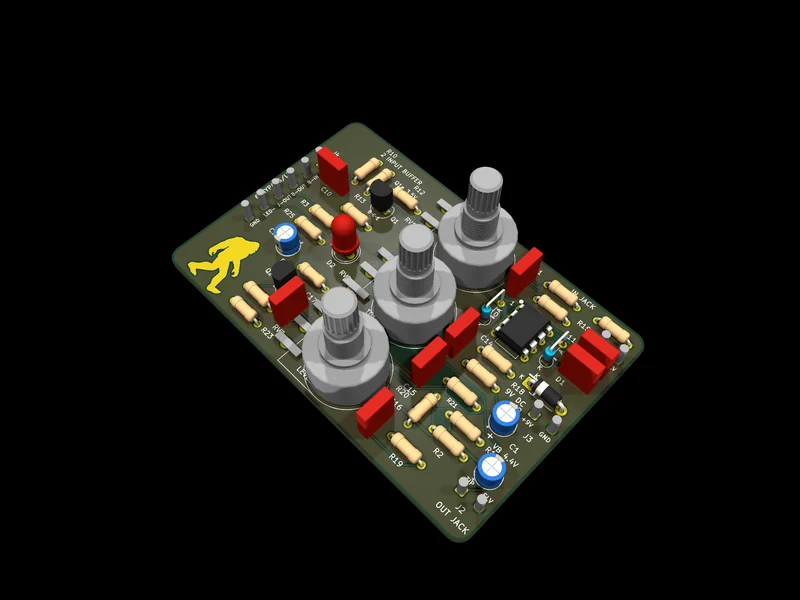
Overdrive kit
SQUATCH TRAIL OD
Soft clipping inside the feedback loop, a tone stage that stays out of the way, and enough room on the board for fingers and an iron.
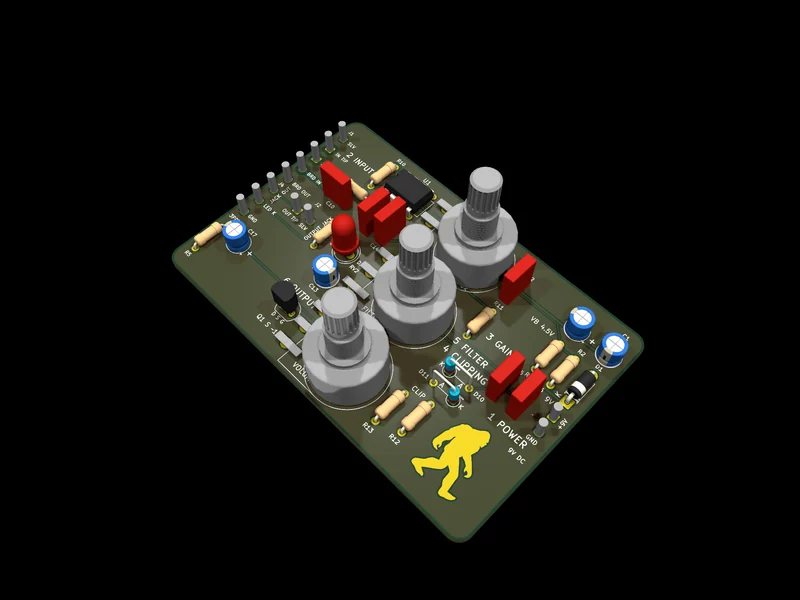
Distortion kit
SQUATCH CLAW
Hard clipping with a filter that opens as you back off. Its circuit model is the one I hold against SPICE, bias-rail sag included.
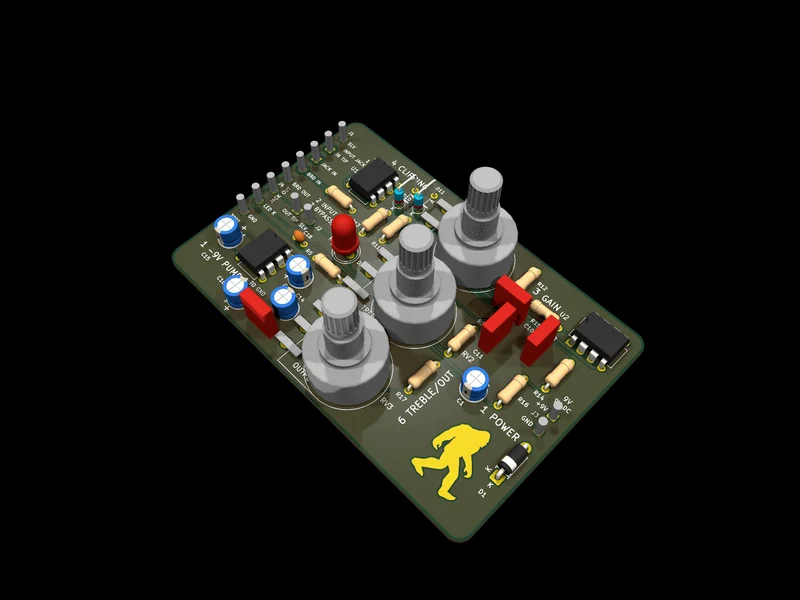
Overdrive kit
SQUATCH GOLDFOOT
A transparent overdrive on a clean blend, so the dry signal stays underneath. Hardest of the three to lay out, and the charge pump is why.